
Is Zoho All I Know?
Someone's going to wonder it eventually. Maybe not out loud. Maybe it's just the quiet thought behind a pause on a discovery call: She only ever talks about Zoho. What other experience does she really have?
It's a fair question. I'd wonder too.
So here's my answer, before you have to ask. Zoho isn't what I know. It's what I chose.
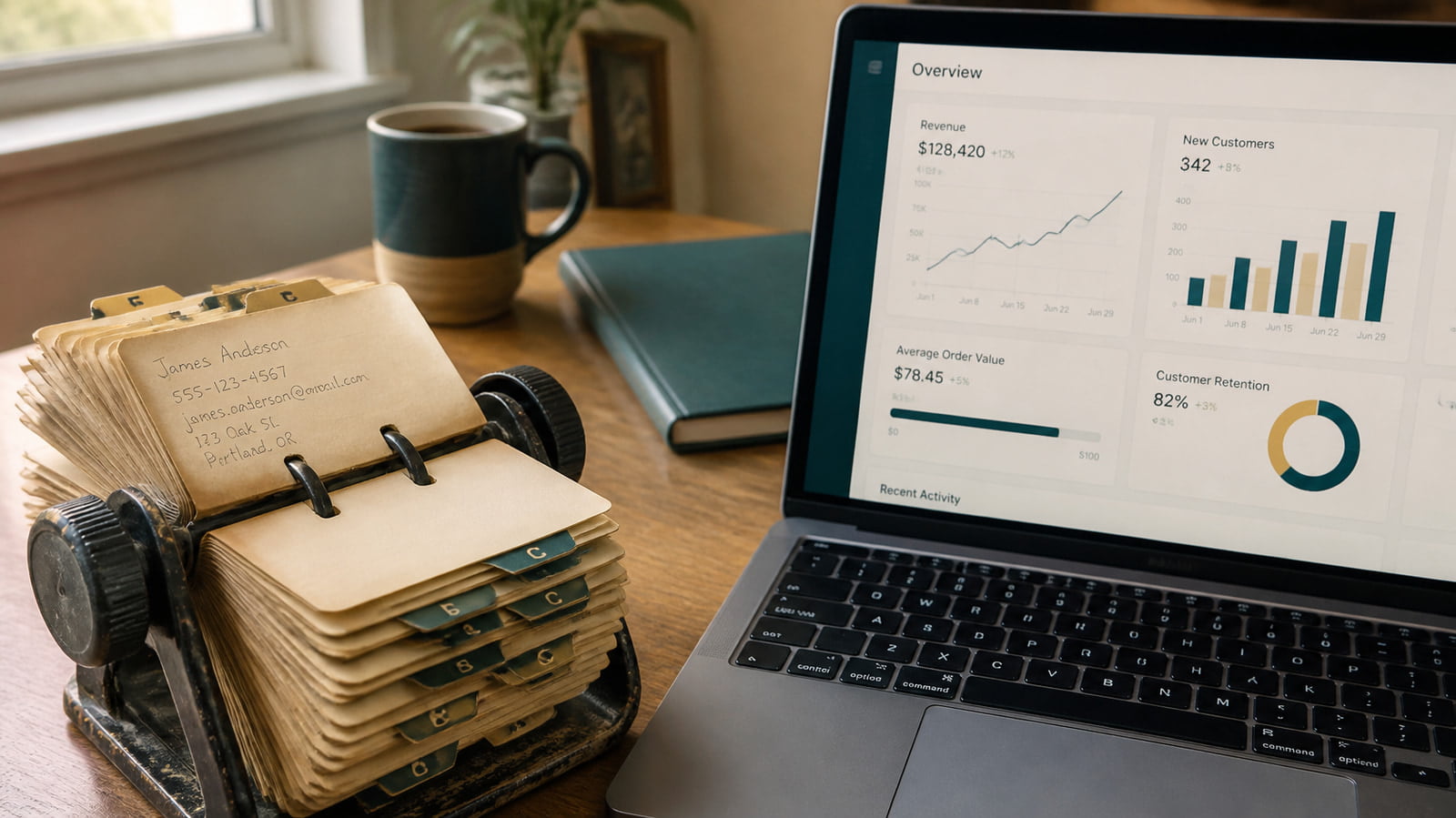
It started with a Rolodex
I was 12 the first time someone trusted me to keep a business organized. My mom ran a direct sales team of more than 200 women across our region, and I became one of her admin assistants. Orders, follow-ups, who needed what and by when, mailing out invitations. I watched her entire contact list move from a paper Rolodex to an Excel sheet, and I remember thinking that spreadsheet was the most BRILLIANT thing I'd ever seen.
(I still kind of think that. Let's keep it between us.)
That was my first operations job. I just didn't know it had a name yet.
Every job since has been the same job
On paper, my career looks like it wandered. Retail came first, where I moved up to assistant store manager. After that, I was a household manager for a family of three. Then came about ten years in weddings and events, running my own planning company while also working for venues, including a casino. From there I went into corporate market research, working my way up to Director of B2B, then became the VP of Business Development at a startup, which led me to a Manhattan-based law firm.
Different industries and different titles, with the same work underneath. In every role, I was the one figuring out how things should run and then making them run that way. Who's responsible for what. Where the information lives. What happens when something falls through the cracks, and how to make sure it doesn't happen twice.
I only recently found the words for it. I'm a business operations architect, and I've been one since I was 12.
The systems I've worked in along the way
Some of these I used every day as part of a team. Others I owned within my role. Here's the short version:
- Microsoft and Google. I'm very comfortable in both, including Teams and Power Automate. (It's part of why I like to say that if Microsoft and Google had a baby, you'd get Zoho.)
- HubSpot, Salesforce, Monday, Mailchimp and Slack. CRMs, project management, email marketing and team chat, used day to day.
- JustCall, RingCentral and Zoom Phone. Business phone systems, because somebody always has to answer.
- QuickBooks, plus more proposal and invoicing systems than I can count.
- Social Tables, AllSeated and point-of-sale systems from my retail and event years.
- OPERA, a hotel booking management tool, at the casino.
- Firm Central at the law firm.
- Thinkific, Circle, Skool, Teachable, Replicants, and Kajabi. Course platforms, including currently building a client's courses on Thinkific.
- A custom-built operating system that one company built to run its business.
- Homestead, which later became Intuit Websites. (Yes, yes I do go back that far.)
- GoHighLevel. I tried it. I didn't go deep, and honestly, it wasn't for me.
- And so many more.
Homestead is the one I smile about though. It's where I built my first website for my event planning business, and where my first business email address lived. It was the first system I ever chose for myself... and even then, I was hunting for tools that worked together. Some things don't change.
I've never shied away from learning a new tool. That's exactly why I can tell you which one I'd choose.
What the casino taught me
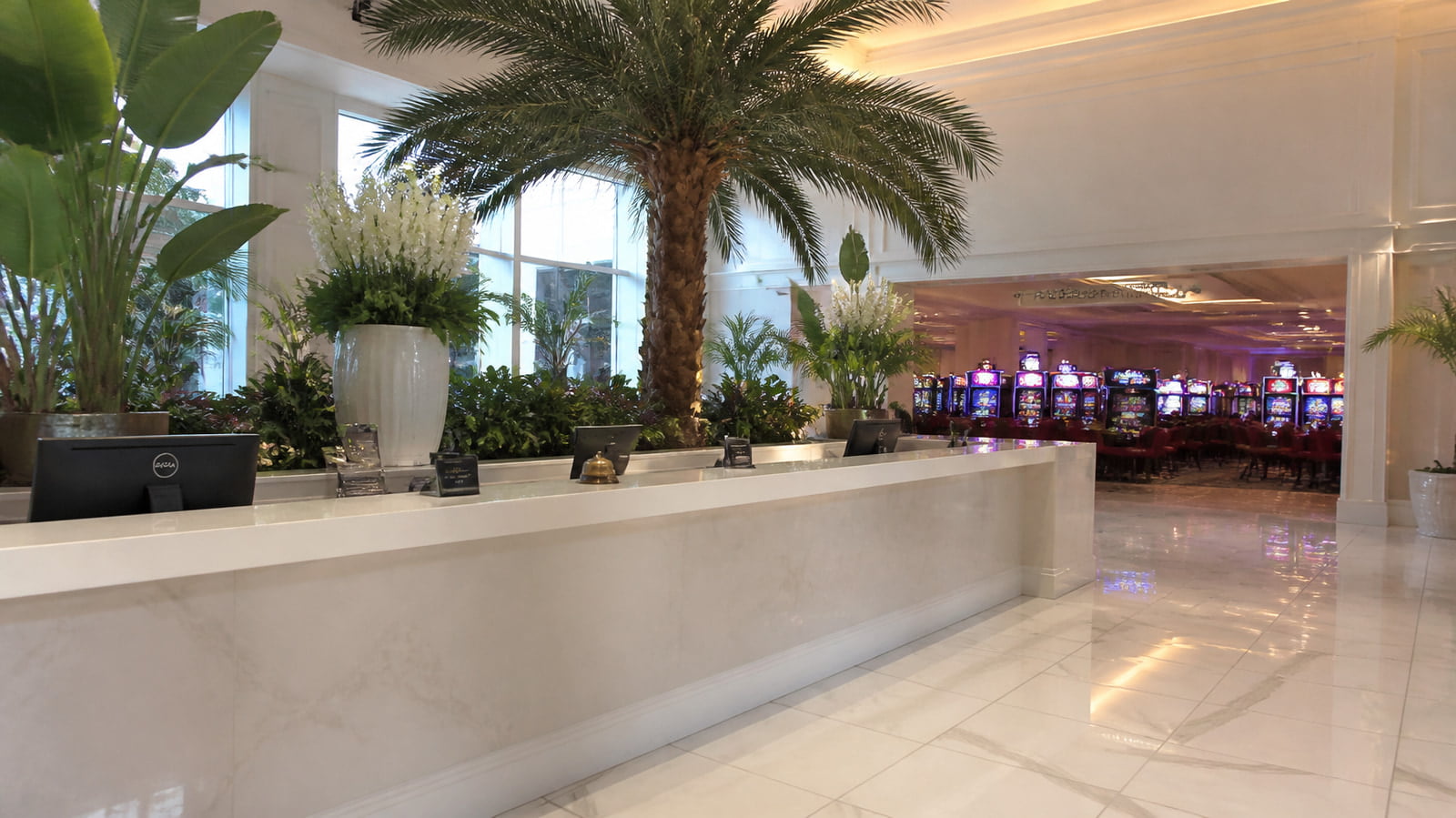
At the casino, I was the executive assistant to the SVP and General Manager. That seat put me everywhere. Every role there, I learned from the ground up. I worked on and off the floor, with high rollers and regular patrons alike, and spent my days in and out of every department, including helping with guest relations. When it was time for me to move on, I interviewed, hired and trained my own replacement. (It's also where I met my husband, so the place gets some extra special credit.)
That job showed me the whole operation at once: every department, and how each one depended on the others to get through a busy night. (Next time we chat, ask me about our grand opening night – it's an awesome story about team work through the chaos!)
It also confirmed something I'd seen in every job before it. Most of the time, the people doing the work are using a system someone else chose. I've been that person more times than I can count, and I know what it costs a team when the tool doesn't fit the work.
A tool that fits disappears into the day. Nobody thinks about it. A tool that doesn't fit gets noticed by everyone, all the time. People build workarounds. Information ends up in three places, and nobody's sure which one is right. The team stops trusting the system and starts trusting their own notes instead.
So I work the other way around. I design the operation first: how the work actually flows, who touches it, and what each person needs in front of them. Then I build the tool around the people who'll use it every day.
So why Zoho?
Because after working inside all of those, I had something real to compare it to.
Here's how I put it: Zoho is the ideal balance between price, sustainability, scalability, customization and connectivity, while covering all the basic tools a business needs.
In plain terms, that means a few things for a business like yours:
- Cost-effective. One subscription covers what usually takes a handful of separate tools on separate renewal dates.
- Room to grow. You don't have to rip everything out and start over when you add people or services.
- Shaped to your process. I build it around how you work instead of asking you to change how you work to fit the software, because you know your industry best.
- Connected. Your CRM, your books, your email and your projects can share the same information, so nobody's typing the same thing into three places.
None of that means the other tools are bad. I've worked in them, and I respect what they do well. I don't believe in competitors. I only believe in partners, and that's an all-around statement.
And the tool still isn't where I start. The technology is a piece of it, but it's not the thing. The thing is how your business actually runs.
If you've been wondering what it's like to work with me
Working with me doesn't start with Zoho. It starts with how your business actually runs: what's working, what's leaking and what you're tired of holding together by hand.
From there, we figure out what your operation really needs. For a lot of businesses, that ends up being Zoho, and when it is, I'll show you exactly why. For others, it means getting the tools you already have to work together, or adding the one piece that fills the gap. Either way, you're not getting a pitch for software. You're getting someone who's worked inside a long list of systems and knows how to make them fit the way you work.
I chose Zoho on purpose. Whatever your system ends up being, I'd love to help you build one you'd choose on purpose too.
If you'd like to see what that looks like, take a look at Ways to Work Together.