
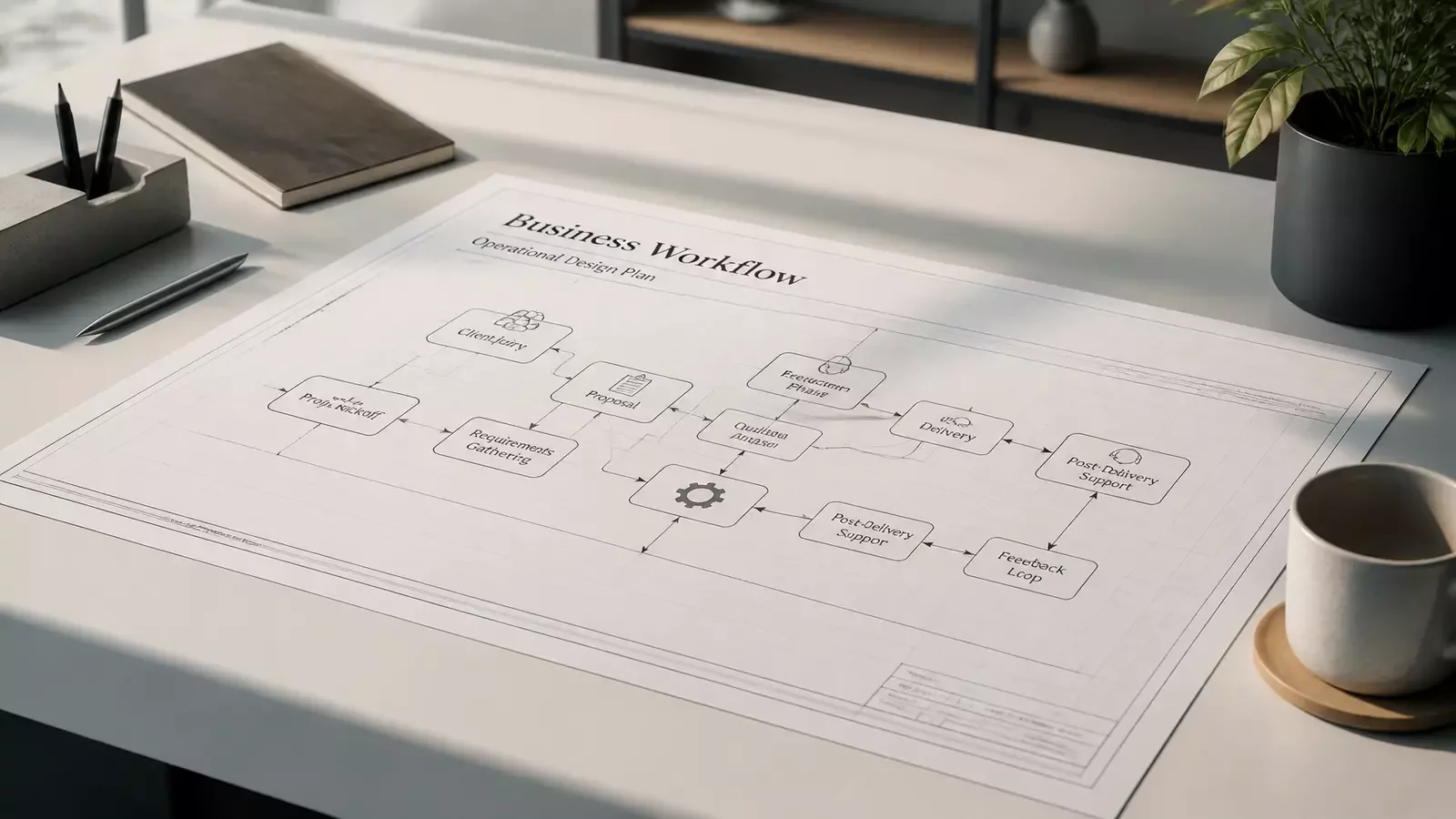
Operational Maturity: When to Stop Tinkering
There's a specific kind of pride that comes with building your own business systems from scratch. In the beginning, you're the founder, the marketer, the salesperson, and the IT department all rolled into one.
You find a tool for email, another for your CRM, and maybe a spreadsheet to track the things that don't fit anywhere else. You learn how to link them together with a few basic automations and for a while, it feels like magic. You've built a machine. It's your machine. But as the business grows, that pride often turns into a quiet, constant anxiety. You start to realize that you aren't just running the business anymore. You're spending half your time maintaining the very tools that were supposed to set you free.
It's the point where most founders hit a wall. It's the transition from the DIY phase to what we call operational maturity.
It isn't just about having more tools or fancier software. It's about moving from a state of tinkering to a state of architecture. When you're tinkering, you're fixing things as they break. When you're an operational architect, you're building a foundation that's designed to stay together even when you aren't the one holding the glue.
The Tinkering Trap and Why We Fall for It
The trap isn't the tools themselves: it's the lack of a cohesive design. Most businesses are built from the outside in. You see a cool feature in an app and you try to force your business process to fit that app. You end up with a Frankensteined system that requires your constant attention to stay functional. You find yourself saying things like, I just need to fix this one automation, or, I’ll just manually export this list one more time. These are the sirens of the tinkering phase. They feel like small tasks, but they're actually symptoms of a deeper structural issue. At Unparalleled MRS, we focus on the Built by Design philosophy, which means we stop looking at the shiny features and start looking at the actual bones of how your business operates.
Recognizing the Five Levels of Operational Maturity
Understanding where you sit on the maturity spectrum is the first step toward getting out of the weeds. In our Unparalleled Integration Architecture lens, this is how we help founders diagnose their current state before they move through the Uncover. Ground. Build. Thrive. framework.
It usually begins at the manual level, where issues are identified only when a customer complains or a deadline is missed. This is the ultimate firefighting mode. You're reactive and every day feels like a scramble to keep the business from stalling out. There are no real processes, just people doing their best to survive the day.
From there, most businesses move into the emerging level. This is where you have some tools in place, but they exist in silos. You might have a CRM and an email tool, but they don't talk to each other. You have some visibility into what is happening, but it's fragmented. You’re starting to track your time or bill your clients more consistently, but the data remains disparate. You're still firefighting, but at least you have a better hose.
The real shift happens at the scaling level. This is the professional foundation. At this stage, your processes are documented and standardized. You aren't relying on one person's memory to know how a project gets finished. You have unified visibility through integrated tools, usually something like Zoho One, where everything from your marketing to your accounting lives in one ecosystem. This level of maturity allows you to move from being reactive to being responsive. You can see a bottleneck coming before it causes a crisis.
Beyond scaling, you reach the proactive and preventative levels. These are the peak of operational flow. In a proactive system, automation is integrated into your daily workflows so deeply that it feels invisible. You aren't just managing incidents: the system spots problems before they happen and gives your team the answers they need without having to ask you first. Your team isn't asking you for permission because the system provides the guardrails they need to work independently. This is the point where the founder can finally step back and focus on the high-level strategy because the machine is running itself.

The Hidden Cost of the Manual Workaround
We often talk about the price of software, but we rarely talk about the price of the manual workaround. Every time you have to copy a name from an email and paste it into a spreadsheet, you're paying a tax. It's a tax on your time, your focus, and your mental energy. Over time, these small taxes add up to a massive operational debt. This debt is what prevents you from scaling. You might feel like you can't hire more people because training them on your messy system would take too long, or you might feel like you can't take on more clients because you're already at your limit.
The reality is that you aren't at your limit: your system is. When you stop tinkering and start building a professional architecture, you're essentially paying off that debt. You're replacing manual, repetitive tasks with seamless, connected workflows. This isn't about overengineering. In fact, true operational maturity is often simpler than the DIY version. It's about having fewer moving parts and more intentional connections. Our approach is centered on this idea of reducing chaos and improving clarity.
Why Ownership Is the Goal of Architecture
Making the Jump to a Connected Ecosystem
If you find yourself constantly adjusting your tools, or if you feel like your data is lying to you, it's a sign that you've reached the end of the tinkering phase. It's an exciting place to be because it means your business has outgrown its "Frankensteined" roots. You have a real operation now, and it deserves a real foundation.
Moving to a professional system like Zoho One isn't just about getting new software: it's about committing to a new way of operating. You're moving from "good enough" to "built for growth." That means choosing tools that support how you actually work today while leaving room for where you want to be tomorrow. Think of it as the difference between building a shed and building a skyscraper. Both require tools, but only one requires an architect.

Ready to Stop Holding It Together Manually?
If you're tired of the constant tinkering and you want a system that actually serves you, Unparalleled Foundation is the structured, expert-led path for building your system with clarity and ownership. If you'd rather have the core architecture designed and built for you, Unparalleled System gives you a clean, connected operational setup without the DIY guesswork. You don't have to do it alone, and you definitely don't have to keep doing it manually. Your business has outgrown the duct tape. It's time to build the foundation that actually lets you lead.